Wednesday, May 26, 2010

Platon and Irving Penn

Paparazzi Prints:
This picture is a paparazzi picture of children playing when the teacher is not around. The young un-named girl got caught on camera spraying one of her classmates with water, after being told not to! This scandalous move from the girl is now on film. Watch out or you could get caught!


This picture is of two women, secretly talking about the cute man at the table next to them. One of the women doesn't want him to notice their interest. She is covering her face in hopes he won't see, yet she is making it all the more obvious! Maybe she should just go over and talk to him, rather than shying away.


Irving and Platon Interviews and Prints:

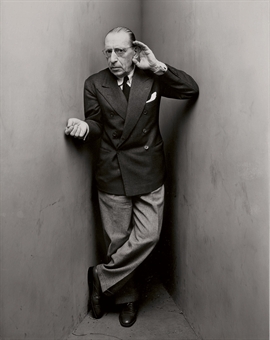
Irving Penn, renowned photographer, known for his fascinating portraits in black and white, and depicting people as mere shapes. He sees, geometrically, how people can look, and bases his pictures on these shapes. He also adds props sometimes to help with this. He may add bulky carpet, chairs, fabric from the model’s clothes, or even the model’s body, to turn his work into art with shape and structure. I had the chance to interview Mr. Penn to talk about a new portrait of his. It is of an older man, standing in a corner of a room, with one hand in an awkward fist, and the other cupping his ear. Irving Penn has so much to portray just in the body positions of his models.

The picture that I am talking about is one of several more portraits with the model placed in a make-shift corner. Penn elaborates further: “I started using this technique when I shot some portraits for Vogue in 1948. I would create a corner for my model by pushing two white panels together. This created a very sharp corner for the model to stand in. Some of my models, like Georgia O”Keefe, felt very constricted in the small space and felt like it took away from them. It made them feel unlike themselves. Some used it to their advantage and fit the structure with an ease, which gave the picture more of a calming mood.”

“A good photograph is one that communicates a fact, touches the heart and leaves the viewer a changed person for having seen it,” quoted by Irving himself. The kind of art that he wants to produce is the kind that changes people and what they get from the picture. We can definitely say that Irving Penn has achieved this through his lifetime of fabulous achievements. He has created a kind of portraiture that artists like Platon are changed from, and base much of their work on his style.

Penn’s work has been in Vogue magazines all around the world. He was also named one of “The World’s 10 Greatest Photographers” in 1958. His style is quite intriguing and creative for his time. Several photographers today owe him for thinking outside the box when it came to portraiture.


Final Print


http://www.christies.com/lotfinderimages/d50540/d5054050l.jpg


In the interview of his new portrait, Platon coolly tells me of how it all started for him. “Much of my influence came from my parents. My mother was an art historian, and my father was an architect. Much of our lives revolved around art. Although I took a different path with photography, I still learned a great deal growing up around this art culture.” Not only in his household did art teaching take place, but also at St. Martin School of the Art in Great Britain, and the Royal College of Art after that. In 1992, he won the acclaimed award of British Vogue’s “Best up-and-coming Photographer”, which shed light on how far this artist could go in the future. In this magazine, he was able to produce both fashion and portraits, allowing him to show off his versatile talents.

Some of his recent portraits display disproportioned people strewn against a white background, while the model has intense lighting on certain parts of their face. The people appear to be disproportioned in that someone’s hand is five times larger than their head. This effect if made by the positioning of the model’s body in respect to the camera; at an angle of the camera. One of his portraits is of Ray Davis, a musician. This portrait focuses on the distortion of his arms and plays this effect with his face. It truly is a modern twist on portraits. Platon is giving us more depth to the picture, by incorporating shadows and texture and shapes. This also gives the model, Davis, a very secretive and mysterious look. Much of Platon’s portraits are similar in style to that of the infamous Irving Penn. There is a parallel in the structure of the pictures: bold shadows and intense shapes and figures created by the models.

Platon has been taking portraits for almost 20 years now and has worked with some well known publications. To name a few: Rolling Stones, Vanity Fair, GQ, and The New Yorker. He has even done some advertisements with Exxon Mobile, Nike, Verizon, and Rolex. Just by looking at some of the people he has worked with shows his diversity and ability to adapt to his employer, whether it is an oil company or high top fashion.

Mr. Platon now resides in New York, working for the New Yorker. He has had a solo portrait exhibition at the Milk Gallery in the same city. The quote that Platon left me with at the end of our interview dealt with his outlook on his work as an artist: “I never publish anything that I am not proud of. For me, experimenting with different techniques helps me develop as a photographer, and can sometimes the outcome can blow you away.”


Final Print


Magazine Cover:


Final Print


Wednesday, February 17, 2010

Save the Children©

Diary Entry:
Save the Children is an organization that works for educating, and providing for children in countries where they are not given the necessities of life. For this contest we were to take pictures of universal education. I had a few ideas on what to take pictures of for
the contest. The theme was universal education. Somehow I had to capture this at my school. The universal part would be somewhat easy because my school has many people from different backgrounds. My ideas were to have a child sitting down reading a very large book, maybe twice his size. For my next picture, I wanted to have two children looking at a teacher when she is explaining something. My last one was to have one child helping out the other on a project. Though my final pictures changed from my original ideas, I was still able to try out some of my ideas as well as create new ones.


Theory Notes:

Inspi(RED)™:


RED is not a charity or a cause, but rather an idea. People buy their products and up to 50 cents of the profits go towards buying antiretroviral medicine to people
dying of AIDS in Africa. Some very famous brands have taken part in RED. Some are Apple, Dell, Converse, Gap, and Nike.

Their media supporters are Facebook, Vanity Fair, HBO, and Elle are a few. These are the mediums in which they get their message across.

Also, here is a video of some famous athletes, promoted by Nike, advertising their new tennis shoe laces that support their fight against AIDS in Africa.
Nike RED


Gap Inc.:
Gap Inc.'s rules to succes aretat they replace their stock very quickly, and their prices are always guaranteed to be low. Gap knows how to stick to the basics, same jeans with few styles and shirts, in several different colors. Much of the success and growth of the company was due to the advertisement by Levi Strauss, since Ga
p used their jeans in their stores. Levi Strauss actually provided all of Gap's merchandise in the beginning.
During 1973, Gap started producing its own products, and using
other brands, along with Levi. A few years after, in 1975, he Gap stores ha
d $100 million in net sales. There was a small slump when the owners, the Fishers, were trying to expand on more than just their jeans and shirts, as well as attempt to appeal to an older age group. After a while, they were liquidated, because it didn't make much of a success.
Soon, Levi jeans and apparel were being sold in department stores, and people no longer had to go to Gap Inc. to get it. They needed something new and
fresh
to attract attention again. Gap's own personal brand gained about
45% of their total sales in 1980. Although the sales were good, if they were to stay up to speed, they would have to have an image, with just Gap as the label. In the late 1990's Gap became too "trendy" and decided that it needed to go back to the basics, bas
ic tees and jeans that is. The did this by using ads in commercials on their Gap Easy Fit Jeans with celebrities.


Not much after that, they began the online gap.com, where shoppers could purchase clothes online. The next year sales went up to $9 billion and 356 new stores opened. From 1984 to 1989, the company grew 24,000 percent. When the new millenium hit, sales dropped by 5%, and by 2001, there was a $7.7 million loss. A writer from the National Post said it was because they lost touch with the customer and they didn't have the same cheap prices people had once been used to. By 2002, the company had changed to focusing on customer research, new advertising, and closing some stores down. The net income was brought back up yo $477 million. Though the economy has since, made the people of Gap somewhat skeptical, they are overall very confident in their name and their time-lasting fashion.
Here, in this picture below, Gap joined with Red, and added some of that merchandise to its line.http://www.fundinguniverse.com/company-histories/The-Gap-Inc-Company-History.html


picture link


Printing Composition:


If one is quiet and still, they may see the great lessons that are being instilled and practiced by children around the world.
This picture shows a young girl, ready to work and learn new things that will be beneficial to herself, as well as the people around her.

A young mind that aspires to learn is the greatest gift a child could give to their community and the world.


Image Bank +:
Abbie Trayler-Smith was born in South Whales in 1977. She went to college in London, for a degree in law, and picked up photography. She took pictures for the school newspaper. By 1998, she got a job working for the Daily Telegraph. The amazing thing about her, is that she taught herself everything she knew when she got the job. Much of her work today, consists of anniversaries from fighting or natural distasters. For example, Pearl Harbour anniversary, in Hawaaii, and the conflict in Darfur. She has clients, but spends a lot of time on her own projects. Here is a picture from one of her documentaries that I find says a lot about the place she photographed this: Yemen. http://abbietraylersmith.com/biography.html

This is a picture of the women in Yemen going to school. They can only have a teacher that is a woman because of the status of women and men there, and how men are looked on more highly than women. But I see that the fact that the women are getting education is a step in the right direction. Also, what is interesting that the women, even when they are not out in the public around men, they still have to keep their faces covered, around other women. This picture says so much more than the women of Yemen getting an education. It gives thought to what kind of society these women live in and the culture of the Middle East.

Monday, February 8, 2010

Traditional Regalia

Diary Entry:


For this project, I had to take pictures of cultures with regalia in it. Regalia refers to the regality, or the “look” of a person of royalty. This deals with the posture and the way that people are positioned in these portraits of regalia. For my first photo, I had to take a picture of my culture, in which I took of my Hispanic roots. For my second picture, I took a
Chinese fan and worked with that and the Chinese attire. Lastly, I took a picture of a militant, with the attire.

Theory Notes:

Regalia in portraits can be expressed or portrayed in different ways, depending on the time as well as culture. In a classical painting, for example Louis XIV during 1670, the family is in a group, but within that group there is a hierarchy. King Louis gets the crown, as well as the scepter and robe. His wife and other close family trickle down as you look at the picture from right to left. At the very front are the children, which have with them a harp and toys. There is also a painting in the painting of two smaller children. Maybe they had died, so to keep them in the family picture, they had a photo of them.


For the contemporary portrait of a royal family, I chose the British Royal Family, The House of Windsor. This picture has Queen Elizabeth II in the center, to show that she is the core or center of this family. On the far front left and right sides are
Princes Harry and William, along with their father Prince Charles. Behind them, are Duchesses, Dukes, Earls, Ladies, Countesses, and Princesses. Here there is also a sense of hierarchy, starting at the front, from core to the outside. Then everyone else behind is a member of the Royal House.


Printing Compositions:
This is my first print, which deals with the Chinese culture. In my picture, there is a conserved factor that adds a nice touch to the picture. The fan and the shirt is a big part in which lends to what culture it is. I used a Canon digital EOS 20D, with a 28-75 mm 1:2.8 MACRO for all of my pictures for this post.


My next print refers to my Hispanic culture. The purse was a key accessory, because I actually got it in Guatemala, where my father is from. What the girl is wearing is traditional to what many people in that region may wear, a simple shirt with a colorful skirt (falda). I added the regal-ness to the picture by the model's stance in the picture.


My final print is part of the American culture. It is a military uniform.This symbolizes patriotism of a country, and my model is standing at attention, which shows regality in the stance of a militant.


Image Bank:


Hiroshi Sugimoto –

Hiroshi Sugimoto took photos of waxworks by Madame Tussaud. He recreated these lifeless figures and made the portraits look as they may have back in the 15th century. This picture of Henry the VIII shows a sense of power that is known by everyone. Sugimoto was born in Tokyo, Japan. Many of his pictures are taken using a silver-print method in printing. He uses his keen eye to make everything seemingly perfect, as he takes a great deal of care with his pictures.


Steen Brogaard –
This is a picture of Denmark’s Prince Joachim and Princess Marie. Here there is a sense of who is in charge, which would be the Prince, for he is standing and it shows that he has dominance. Also, his military attire adds to his power. The princess is quite dainty and looks elegant with her sitting and her hands in a proper position. Steen Brogaard, who is a Danish photographer, took this picture. He has taken several pictures of the royal family and is well respected for his work. He also took picture of Prince Frederik, for his biography, Frederick, Crown Prince of Denmark.


Annie Leibovitz –
This picture was recently taken of the President of the U.S. and his family. Although he is not royalty, he and his family are known in the public eye. This is a picture where the family seems very approachable, even though you know that the President is known as a very important man. This sense of regality is different than the one of the prince of Denmark, but still shows a sense of power.


Image Bank +:
William Hogarth –
William Hogarth was born in 1697, and lived until 1764. Born in London, he was an apprentice to a goldsmith. Later he became known as a painter, and one of his famous paints was A Rake’s Progress, drawn in 1735, which contains a set of 8 paintings in total. The pictures show you certain snapshots of a man that goes by the name of Tom Rakewell. Some of the scenes have him preparing for his father’s funeral, gets saved from prison, and finally, in the last scene, ends up in a mad house.


In 1745, Hogarth made another set of paintings, this time 6, with the title Marriage-`a-la-mode. These prints were used to tell a story of a marriage gone all wrong. The end of this picture story also ends in death of the main character. Also throughout his paintings, he started making life-sized portraits.


Annie Leibovitz –
Annie Leibovitz has been taking pictures for the past 30 years. She is from Waterbury, Connecticut, and attended the San Francisco Art Institution. She first went there for painting, but after going to Japan with her mother, she discovered that she wanted to study photography.


In 1970, she started working for Rolling Stone magazine in San Francisco. On her first out-of-town assignment, she took a picture of John Lennon and it ended up on the front cover of the magazine. By 1973, she became Rolling Stone’s chief photographer.


In 1982, the art director of Vanity Fair asked her to contribute to the magazine. By the next year, she permanently started working for the magazine. Also, her first book, self-titled, became published.
She later starts working for Vogue in 1998. She has another book published called Women.
Annie met Susan Sontag at a photo shoot for Sontag’s book, Aids and It’s Metaphors. From there, they began a 15 year friendship that lasted until Sontag died of cancer. After her death, Leibovitz put together pictures of Sontag, even when she was ill, and published the in A Photographer’s Life: 1990-2005.


Annie Leibovitz has an amazing eye for the detail in a picture, and she knows how to bring the personality of the person she is photographing in the picture. Also, her most recent picture with President Obama is an example of a “casual” regal picture. She can create a very nice picture, while still having the wholesomeness that people expect to see from the President and his family.